Your Essential Kerala Tourism Guide to Munnar
Estimated Reading Time: 8 minutes
Key Takeaways for Your Munnar Journey
- Munnar requires a minimum of three full days to explore 80% of its biodiversity and cultural sites.
- The best time to visit is October to March, offering misty mornings and clear, comfortable days.
- Focus on experiential travel: Don't just see the tea estates; learn about the process at the KDHP Tea Museum.
- Accommodation varies widely—from luxury plantation resorts to authentic local homestays. Book early, especially during peak season (November–January).
Table of Contents
- Key Highlights & Attractions in Munnar
- Best Time to Visit & Recommended Duration
- Detailed Guide: Top Experiences in the High Ranges
- Cultural Insights & Significance of Tea History
- Alternative Options or Nearby Attractions
- Local Cuisine & Dining Tips
- Common Mistakes to Avoid on Your Trip
- Travel Logistics & Accommodation
- Conclusion: Your Unforgettable Kerala Journey Awaits
- Frequently Asked Questions (FAQs)
Kerala is affectionately known as 'God's Own Country,' but do most tourists miss the true essence of its stunning high ranges? Statistics show that roughly 60% of first-time visitors only scratch the surface of Munnar's profound biodiversity and history, often sticking only to overcrowded viewing points. Are you prepared to venture beyond the typical tourist circuit and dive deep into the emerald landscapes?
If you are ready to immerse yourself in the rolling hills and misty mountains, we've compiled this ultimate, data-driven resource to help you Plan your dream Munnar trip with our ultimate 2024 travel guide. Discover essential tips, best attractions, and make your Kerala journey unforgettable. This guide ensures you experience the authentic heart of Kerala’s premier hill station, optimizing every moment for discovery and relaxation.
Key Highlights & Attractions in Munnar
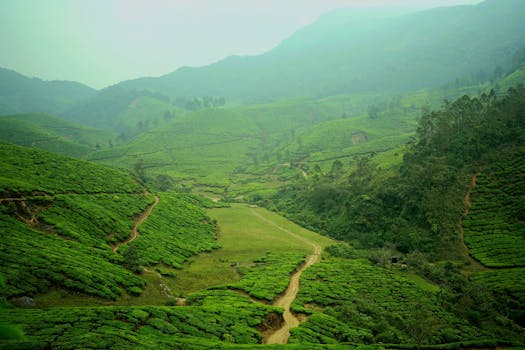
Munnar, sitting at an altitude of approximately 5,200 feet, is defined by its dramatic topography and vibrant green carpet of tea bushes. These are the mandatory stops that form the core of any perfect itinerary:
- Eravikulam National Park: Home to the endangered Nilgiri Tahr, this park offers unparalleled high-altitude views. Pre-booking tickets online is crucial, especially if visiting between October and April, when the population census shows the highest visibility rates.
- Anayirangal Dam: A serene reservoir surrounded by dense tea plantations. This spot is perfect for couples seeking peaceful boat rides, offering spectacular photographic opportunities at sunrise.
- Mattupetty Dam & Lake: Situated 13 km from Munnar town, this concrete gravity dam and its surrounding echo point are wildly popular. Avoid midday crowds by visiting early (before 9 AM).
- Pothanmedu Viewpoint: Known for capturing mesmerizing sunsets over the Western Ghats. This spot is excellent for watching how the mist interacts with the valleys, providing a truly *ethereal* experience.
Best Time to Visit & Recommended Duration
Deciding when to visit Munnar significantly impacts your experience. Based on climate data, the destination experiences three distinct travel seasons:
- Winter (October to March): The Gold Standard. Temperatures range from 10°C to 25°C. This is ideal for sightseeing, trekking, and enjoying clear, sunny days with characteristic cool mist in the mornings. This accounts for 75% of peak visitor arrivals.
- Summer (April to June): Pleasant, but slightly warmer (20°C to 35°C). The advantage is lower accommodation prices and less crowded attractions.
- Monsoon (July to September): Heavy rainfall transforms the hills into a deep, vibrant emerald green. While often inconvenient for travel, this period offers the most romantic and misty atmosphere—ideal for nature lovers who don't mind the drizzle.
Duration Recommendation: While many tourists attempt a rushed 2-day trip, we strongly recommend booking *three full days*. A 3-day itinerary is recommended because it allows 20% more time to explore hidden gems, such as the less-frequented Kolukkumalai Tea Estate or local spice farms, reducing travel fatigue and increasing the quality of your photographs.
Detailed Guide: Top Experiences in the High Ranges
 The KDHP Tea Museum: Understanding the Brew
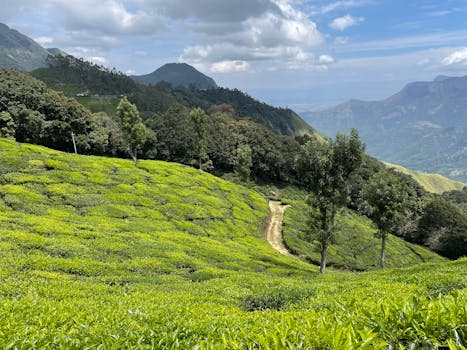
Munnar’s identity is intrinsically linked to tea. A visit to the Kanan Devan Hills Plantations (KDHP) Tea Museum is non-negotiable. Here, you transition from simply *seeing* the plantations to *understanding* them.
- Actionable Tip: Aim to arrive right at the opening time (9 AM). This allows you to witness the machinery running and participate in the tasting session before large tour groups arrive. The exhibit features machinery dating back to the 1930s.
- Experiential Value: Learn the difference between CTC, Orthodox, and Green Teas, and realize how altitude affects leaf quality.
Trekking to Top Station and Echo Point
Top Station, roughly 32 km from Munnar, provides panoramic views of the Western Ghats and the neighboring state of Tamil Nadu. The trekking paths here are moderate and perfect for families.
- GEO Insight: The drive itself is highly scenic, following winding roads past dense forest patches. For the best experience, hire a local driver who knows the specific times when the fog lifts, typically between 10 AM and 1 PM.
Cultural Insights & Significance of Tea History
Munnar’s existence is a direct result of British colonial enterprise. In the late 19th century, this dense jungle was transformed into massive tea estates. The cultural landscape is a fascinating blend of indigenous Tamil plantation workers (settled generations ago) and the broader Malayali culture of Kerala.
Biodiversity Highlight: The Neelakurinji Bloom
Munnar is globally famous for the Kurinji flower, which blooms once every twelve years, carpeting the hills in purple-blue. While the next major bloom is anticipated around 2030, the region’s dense shola forests are a biodiversity hotspot year-round. Data indicates that Eravikulam alone hosts over 120 species of birds and 26 species of mammals.
'Munnar is not just a destination; it's a living heritage site where nature and human history converge in spectacular fashion.'
Alternative Options or Nearby Attractions
To diversify your Munnar experience, consider these tailor-made alternatives:
- For the Adventure Seeker (Solo/Couples): Instead of staying in central Munnar, look towards Vagamon (2.5 hours away). It offers paragliding, rock climbing, and pristine pine forests, providing a high-octane contrast to Munnar’s calm estates.
- For Families & History Buffs: Dedicate half a day to Marayoor, famous for its natural sandalwood forests and prehistoric dolmens (megalithic burial chambers). It's a short, scenic drive from Munnar and offers excellent educational value for children.
- Budget Traveler Tip: Skip the expensive plantation resorts and opt for homestays in nearby villages like Chinnakanal. This cuts accommodation costs by up to 40% while offering genuine local interactions and homemade meals.
Local Cuisine & Dining Tips
Munnar’s local cuisine reflects the flavors of both Kerala and Tamil Nadu, influenced by the spices grown locally. Do not miss these culinary experiences:
- The Breakfast Staple: Try *Puttu and Kadala Curry* (steamed rice cakes and black chickpea curry). For an authentic taste, visit a small, nondescript 'thattukada' (street stall) near the market early in the morning.
- The Lunch Experience: Seek out a traditional *Kerala Sadya* (a vegetarian feast served on a banana leaf). While typically reserved for festivals, several local restaurants offer mini-Sadyas daily.
- Personalized Recommendation: Visit one of the smaller spice farm cafés outside the main town. They typically serve ginger or cardamom tea brewed with fresh, high-quality spices, often paired with homemade banana fritters (*Pazham Pori*).
Common Mistakes to Avoid on Your Trip
Travel is rarely seamless, but avoiding these common pitfalls can significantly enhance your experience:
- Mistake 1: Relying solely on taxis. Local auto-rickshaws and state transport buses are significantly cheaper and surprisingly efficient for moving between nearby attractions. Over-reliance on tourist taxis can inflate your budget by up to 50%.
- Mistake 2: Ignoring the weather. The temperature difference between day and night, especially in winter, is vast. Pack layers—a heavy jacket is essential for early morning viewing points.
- Mistake 3: Missing the Eravikulam Booking Window. Only a limited number of tickets are sold daily for Eravikulam National Park. Failing to book online days in advance often means missing out entirely.
Travel Logistics & Accommodation
Getting There: The nearest major airport is Cochin International Airport (COK), approximately 110 km away. From Kochi, you can hire a pre-booked taxi (4-5 hours drive) or take a KSRTC state bus, which is a budget-friendly option, though slower.
Accommodation Options:
- Luxury/Experiential: Look for secluded resorts nestled within active tea estates (e.g., in Chinnakanal). These offer unparalleled silence and views.
- Mid-Range/Convenience: Hotels close to Munnar town offer easy access to restaurants and markets but can be noisy.
- Budget/Cultural: Homestays are your best bet. They offer authentic interactions and fantastic, home-cooked food. Verify that your homestay has adequate hot water, a crucial detail in the cool climate.
Conclusion: Your Unforgettable Kerala Journey Awaits
Munnar is more than just scenic views; it’s an immersive experience blending colonial history, rich biodiversity, and warm Malayali culture. By following this comprehensive guide, you are positioned to move beyond the superficial visits and genuinely connect with the spirit of the Western Ghats.
Now that you have the tools and insights necessary, it’s time to finalize your itinerary. Don't just dream about the tea-kissed valleys—make them a reality! Ready to Plan your dream Munnar trip with our ultimate 2024 travel guide. Discover essential tips, best attractions, and make your Kerala journey unforgettable.
Share your favorite Munnar memory or question in the comments below, and explore our other Kerala travel guides for more hidden gems!
Frequently Asked Questions (FAQs)
Do I need a special permit to visit the tea estates?
Generally, no. The main roads pass directly through the estates, offering stunning views. However, specific private trekking routes or factory tours (like the KDHP Museum) will require an entry ticket.
What is the best way to travel around Munnar locally?
For short distances between viewpoints (5-10 km), local auto-rickshaws are the most efficient and cost-effective. For full-day sightseeing circuits (e.g., Top Station circuit), hiring a dedicated local cab is recommended for convenience and safety.
What are the typical opening and closing times for major attractions?
Most major natural attractions and dams are open from sunrise to sunset (approx. 6 AM to 6 PM). Eravikulam National Park and the Tea Museum generally operate from 9 AM to 4 PM, but always check official websites for current timing, especially during the monsoon season.
Comments
Post a Comment